November 11, 2026
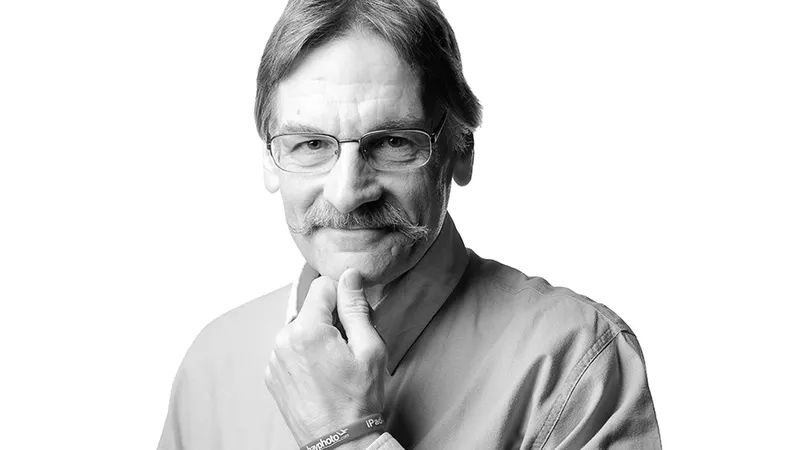
Glen Clark started college in 1970. This December, he’ll earn his bachelor’s degree.
As a substitute teacher in Aiken County, Glen Clark noticed the diplomas teachers hung in their classrooms. They reminded him of a promise he’d made to himself years earlier. On Dec. 10, 56 years after he first enrolled in college, Clark will graduate from the University of South Carolina Aiken with a bachelor’s degree in communication.
“I promised myself at some point that I would complete a four-year degree,” Glen Clark said. “But then work got in the way, and I just kept advancing and changing, and things kept happening. The next thing I knew, a couple of decades had gone by.”
From photography to marketing
Clark enrolled at the University of California, Riverside, in fall 1970. He soon realized the program was a poor fit and returned to the San Francisco Bay Area, where he enrolled in the photography program at De Anza College.
After earning an associate degree in photography, Clark took courses in graphic arts, business and cultural management. He attended San José State University, UCLA and Pepperdine University as he looked for a field that fit his interests.
The Vietnam War draft also shaped his early college decisions. Clark recalled drawing a draft lottery number of 2, putting him among the first eligible men who could be called to serve.
“I was working a summer job painting the inside of a teacher’s house, and the radio came on and said they’d just done the draft for that year,” Clark said. “When they called my number, being number 2, I just dropped the paintbrush.”
Clark ultimately did not serve in the military, as the draft was canceled before his interview..
“The military draft was a stimulus for going to school and staying in school,” he said.
Clark was paying his own way through college. As he worked to support himself, finishing his degree became less urgent.
His background in photography led him into sales and marketing. As he advanced, he earned a strategic marketing certificate through Case Western Reserve University.
By the late 1990s and early 2000s, Clark had advanced to a management position at a company with $50 million in annual sales. He had built a career without a bachelor’s degree. In 2020, during the COVID-19 pandemic, he lost his job.
“The pandemic brought things to a halt, and for a variety of reasons, my job went away. At my age, it was questionable what I should do,” he said. “My wife, in all her wisdom, said we couldn't afford to keep living where we were without my job. The result was our decision to relocate to South Carolina.”
Back to the classroom
After moving to South Carolina in late 2020, Clark continued working as an independent contractor and began thinking about retirement. His wife suggested he try substitute teaching. After completing the training, he began working in Aiken County schools.
A school administrator encouraged Clark to consider a teaching degree. When Clark looked into the requirements, he found he would need a bachelor’s degree.
“I was joking with him, saying, ‘This is the first time, after all these years, the first time anybody ever cared whether I had a degree or not,’” Clark said.
Clark wanted an affordable program he could complete online that would make the most of his previous college credits. He was also thinking about how he wanted to use his degree.
“I also had a drive to go into ministry or religion or theology,” Clark said. “Now, I wanted something that was actually not just about making money, but about how I can use the talents that God has given me.”
Finishing at USCA
South Carolina’s senior tuition waiver helped make Clark’s return to college possible.
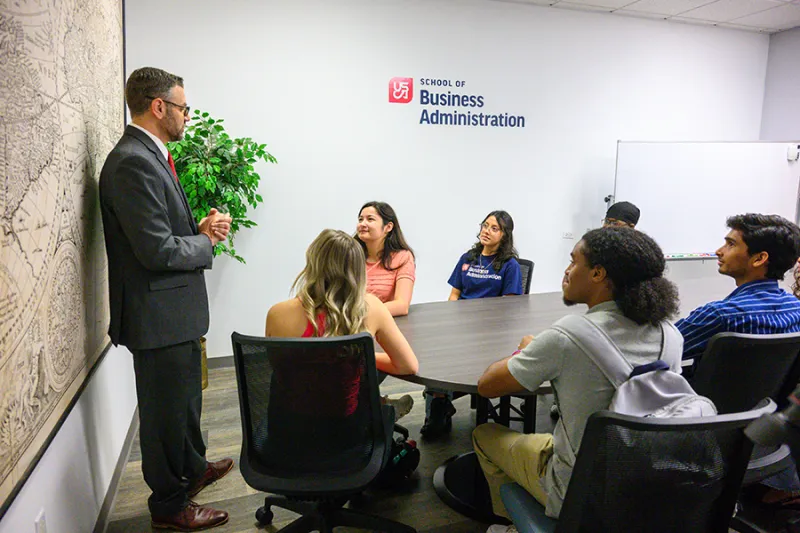
USCA offered online degree-completion programs through Palmetto College. Clark initially chose emerging media, drawing on his background in photography, then switched to communication after taking classes with Jason Munsell, associate professor and chair of Communication & Emerging Media at USCA.
“Dr. Munsell was a big influence on me,” Clark said. “I liked what he shared about ancient philosophy and the timelessness of Plato and Aristotle. Eventually, I changed from emerging media to communication. I took classes in both areas, and that's how I got to where I am.”
Munsell taught and advised Clark and helped guide his capstone project.
“I offered some guidance during his capstone project, which involved working with Stand Firm, a men’s devotional magazine,” Munsell said. “It was a fitting project for Glen, given his dedication to his photography, writing, family and relationships with fellow students.”
Munsell added that he couldn’t be prouder of Clark. “This is one of the reasons we created online degree-completion programs in communication and emerging media at USCA — so students like Glen can finally finish what they started.”
Clark urges younger students to finish their degrees while they can.
“If I had an opportunity to turn around and talk to younger people, I’d say, ‘Look, whatever you do, finish your degree now, because it is much harder if you wait,’” Clark said.
He plans to put three words on his graduation cap: “Never too late.”